2026 Digital Poster Gallery


Bridging Theory and Practice in Economics and Computer Science Education
Shuoshuo Hou, College of St. Benedict and St. John’s University
Vijay Srinivas Tida, College of St. Benedict and St. John’s University
Learner-centered worksheets, Think–Pair–Share, and games improve quantitative understanding, engagement, and confidence across Computer Science and Economics courses.

Building Resiliency Networks: Mindfulness Communities on Campus
Lesley Regalado, University of Texas at Arlington
Thomas McCaleb, University of North Texas
This poster explores peer and faculty-led mindfulness communities that create sustainable resiliency networks, building coping skills and social connection while empowering participants as wellness leaders.
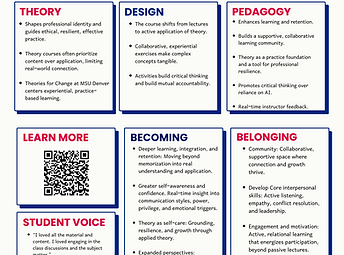


Embrace Otherness Project: A Case Study of Human-Centered Design Thinking
Koon-Hwee Kan, Kent State University
Preservice art teachers interviewed international graduate students as VIP-Clients to deepen understanding of cultural traditions and aesthetic preferences before individualizing their designs as gifts.

Enhancing Student Success Using Engagement Teams in a Traditional Engineering Course
Sarah Lanci, Colorado Mesa University
Redesigned engineering course using engagement teams increased student participation, strengthened peer connections, improved exam performance, and encouraged use of academic resources, fostering a more interactive learning environment.

From Data To Sensemaking: Supporting Student Learning Through AI-Integrated CURE Design
Li Xu, The University of Arizona
This poster presents an AI-integrated CURE design that supports student sensemaking with real-world cybersecurity data through scaffolded assignments, ethical AI use, and research-driven learning.


How AI Policy Shapes Perceived Fairness, Belonging, and Academic Engagement
Maedeh Gholamzadehmi, University of Oklahoma
Jorge Restrepo Garcia, University of Oklahoma
Adrienne R. Carter-Sowell, University of Oklahoma
Explores how inconsistent AI policies in first-year courses affect students’ fairness perceptions, belonging, and engagement, offering strategies for equitable guidelines that support confidence and retention.

Keeping Students Cognitively Active: Evidence-Based Strategies for Math-Heavy Engineering Courses
Stanley Baek, United States Air Force Academy
Explore evidence-based techniques that increased student engagement and performance in math-heavy engineering courses through active participation, reduced distractions, and strategic course design.


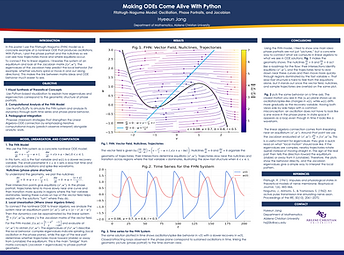

Perceptions of Sense of Belonging and Academic Success in Healthcare Students
Jenise Morrison, University of Mary Hardin-Baylor
This study examines how graduate healthcare students’ sense of belonging influences perceived academic success, identifying belonging as a factor linked to persistence and lower burnout.

Physical Archives or AI? Student Preferences in Evidence-Based Teaching
Shima Hosseininasab, North Carolina State University
Comparing hands-on archival experience with AI access, this study tracks student preferences. It positions special collections as essential labs for developing critical thinking. View findings!


Redesigning Capstone Projects for AI-Rich Learning: Balancing Authenticity, Process, and Integrity
Rebekah Pogwizd, Augustana University
Exploring process-focused, authentic capstone project strategies that integrate AI while maintaining integrity, reflection, and higher-order learning in Doctor of Occupational Therapy education.

SPARC: A Research and Collaboration Model To Improve Undergraduate Physics
Yoel Rodríguez, Hostos Community College of CUNY
Antonios Varelas, Hostos Community College of CUNY
Anna Ivanova, Hostos Community College of CUNY
Anthony L. DePass, DePass Academic
Addressing challenges in undergraduate physics via SPARC novel intervention that leverages methods to facilitate content learning, reasoning transfer, and prepare students for subsequent science/engineering curricula.


